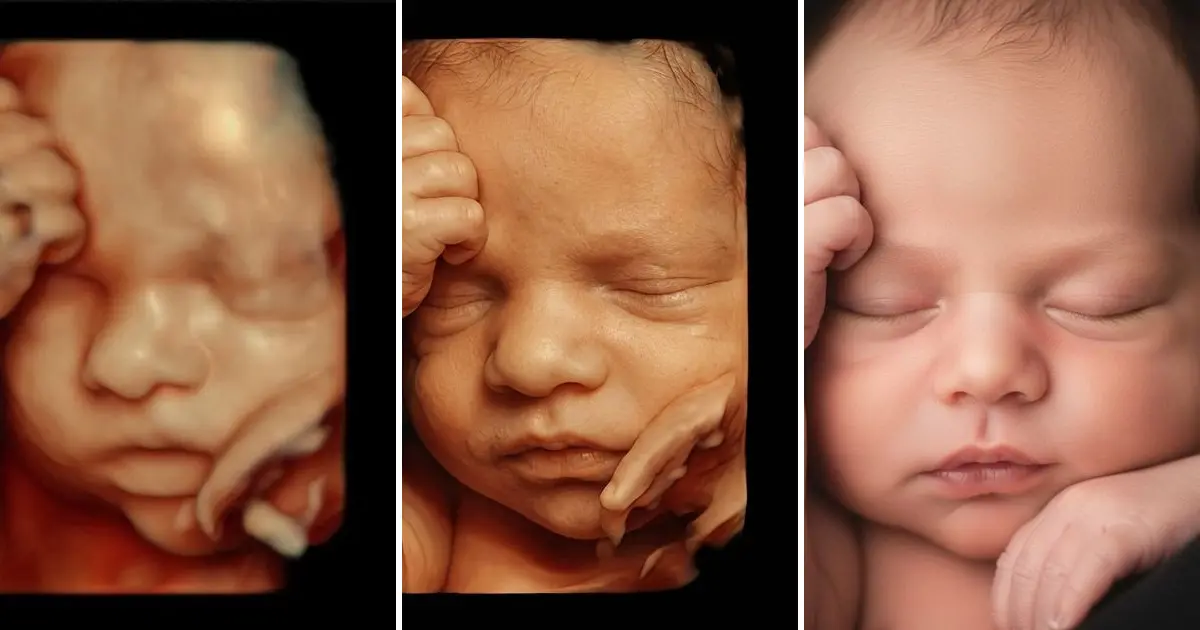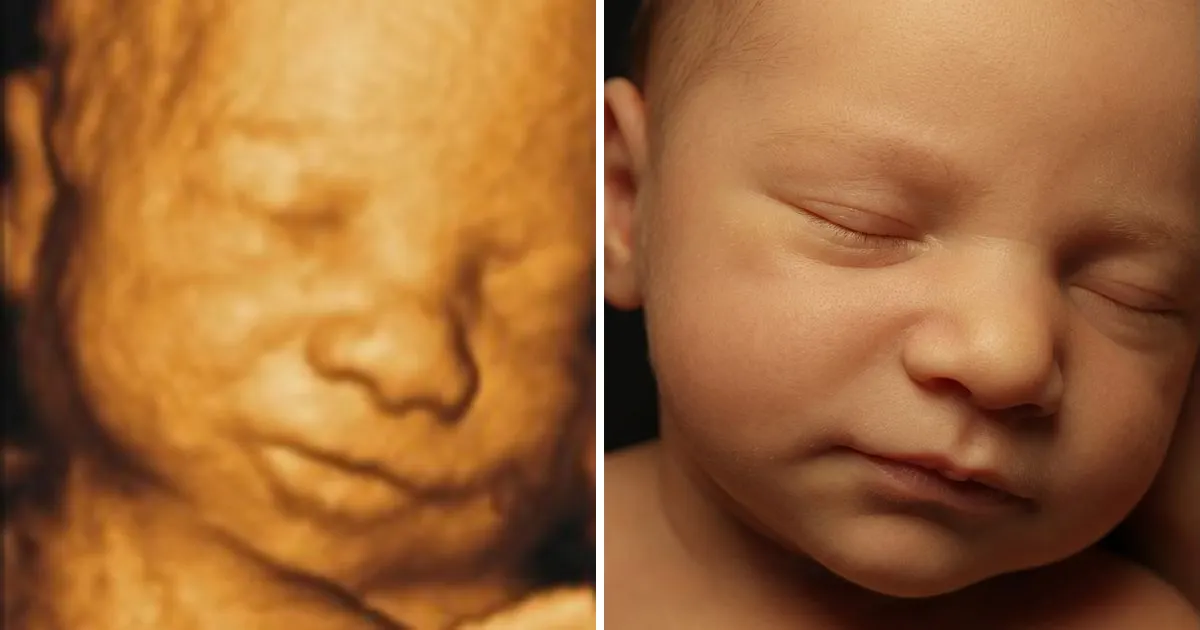

“Who will the baby look like?” The question comes up at every family dinner as soon as a pregnancy is announced. There are quizzes, apps that blend the parents’ photos and plenty of theories from relatives. In this article we separate what you can really know about your baby’s face before birth, what is only probability and the four clues that actually help.
What you can (and can’t) know before birth
| Feature | Can it be predicted? | Best clue |
|---|---|---|
| Shape of the nose, lips and chin | Yes, to a large extent | 3D/4D ultrasound between weeks 26 and 30 |
| Eye color | Only probabilities | Parents’ genetics, then wait until about age one |
| Hair color and type | Only probabilities | Genetics of parents and grandparents |
| Skin tone | Only probabilities | Genetics; it changes in the first weeks |
| “Who the baby looks like” | No | Only time (and your family’s opinion) |
Clue 1: the 3D ultrasound
It’s the only image of your actual baby you can have before birth. A clear 3D or 4D ultrasound shows the real shape of the nose, lips, cheeks and chin, which are exactly the features people use to say “he has dad’s nose” or “she has mom’s mouth.” For the face to show well, the ideal time is between weeks 26 and 30.
What an ultrasound can’t show is skin, eye and hair color. For those, the clue is genetics.
Clue 2: the parents’ genetics
Each parent passes on half of their genes, in a combination that is shuffled with every pregnancy. That’s why siblings can look so different. A few key points:
- Eye color depends on several genes, not just one. The school idea that “brown always beats blue” is a simplification: two brown-eyed parents can have a light-eyed baby, and the opposite can happen too, although it’s rarer.
- Eyes change. Many babies are born with lighter eyes that darken during the first year as melanin builds up. Most settle by around one year, though some keep changing a little until about age three.
- Hair also depends on several genes. Two dark-haired parents can have a red-haired baby if both carry the red-hair variant. And newborn hair often falls out and grows back different.
Clue 3: the parents’ baby photos
This one is underrated. Comparing a baby’s face with an adult face is misleading, because faces change a lot with age. Dig out your own baby photos, ideally from a few months old, and put them next to the ultrasound or the newborn. Resemblance is usually much easier to spot.
Clue 4: the rest of the family
Some features skip a generation and come back: grandma’s nose, an uncle’s dimples, a great-grandparent’s light eyes. If someone in the family has a very distinctive feature, it may show up in the baby even if neither parent has it.
See your baby’s face
Upload your 3D ultrasound and get a hyperrealistic image of your baby’s face in about 30 seconds. Then let the family decide who the baby looks like.
See my baby’s face →What about baby face generator apps?
Apps and quizzes that create a baby face from the parents’ photos average two faces and generate a third, invented one. It’s fun, but it has nothing to do with your real baby: the app doesn’t know which genes your baby inherited, and the same couple always gets the same “baby,” even if they have five very different children.
The difference with an image created from your ultrasound is where the face comes from: in the ultrasound, the face belongs to your baby, and the technology only makes the image sharper and more realistic. We explain how it works in how to see your baby’s face from an ultrasound with AI.
Do babies look more like their dads?
It’s a popular belief. A 1995 study suggested that babies resembled their fathers more during the first year, but later research couldn’t confirm it. What is often observed is something else: relatives tend to say the baby looks like dad. In practice, most babies mix features from both parents, and resemblance shifts a lot during childhood.
If you want to know how closely an ultrasound face matches the newborn, read 3D ultrasound vs real baby.