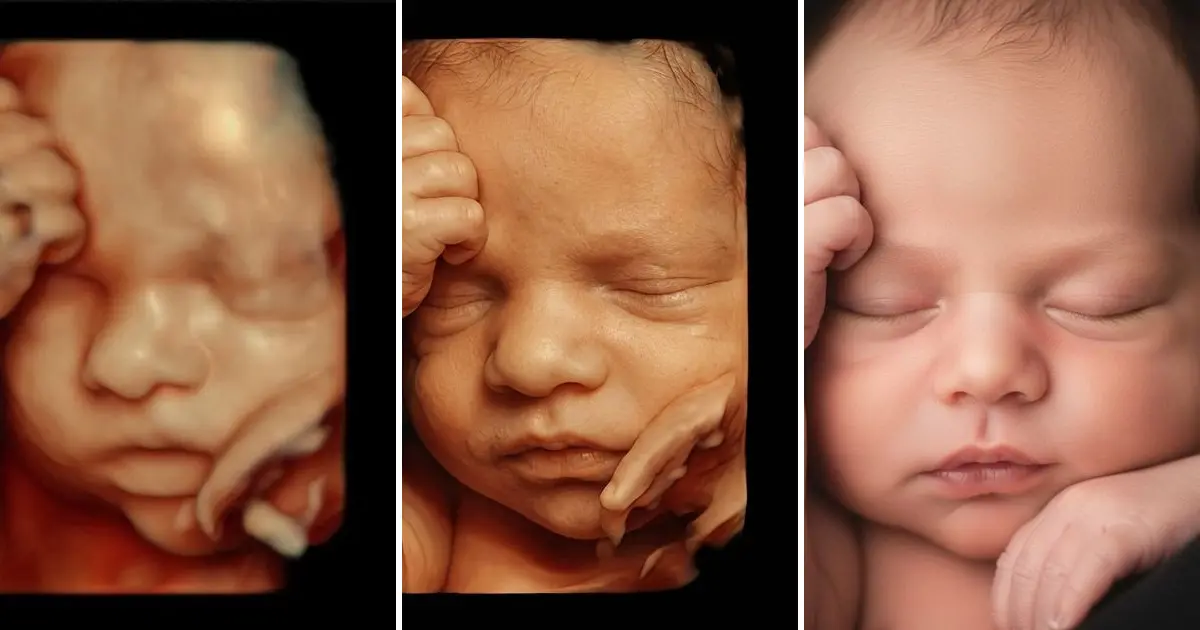
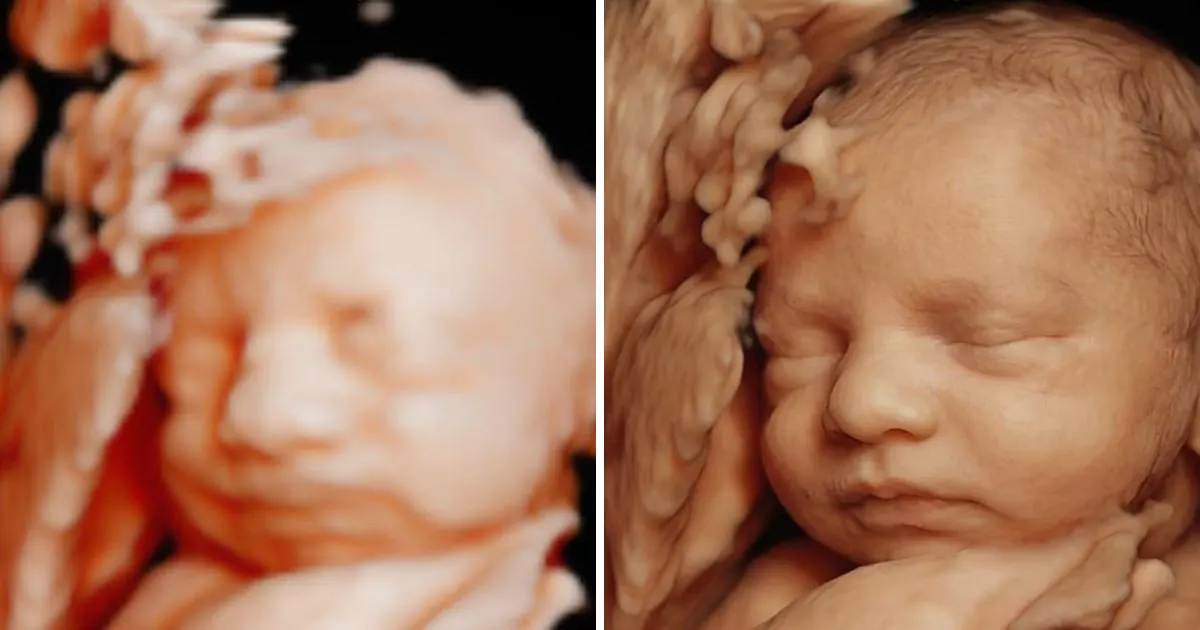
If you have heard about 5D ultrasound and wonder how it differs from 3D and 4D, what you can actually see and whether it is worth it, this guide answers all of that. We also explain how, if you already have a 5D ultrasound (or any 3D/4D scan), you can take it further with an 8K hyperrealistic enhancement without leaving home.
What is a 5D ultrasound?
A 5D ultrasound is a prenatal imaging technique that adds advanced texture, light and color rendering to the volumetric capture of a 3D/4D scan. The result is an image with higher definition, warmer tones and an almost photographic look of the baby’s face.
The “5D” label does not refer to a fifth physical dimension: space is still three-dimensional. It describes the level of processing applied by the machine. Beyond depth and movement (3D + time = 4D), these scanners use rendering algorithms that enhance skin texture, smooth acoustic noise and simulate lighting so the face looks much closer to a real photograph.
Manufacturers sell it under their own names — for example HDlive on GE HealthCare Voluson machines, or CrystalLive and RealisticVue on Samsung scanners — but the idea is the same: bring volumetric ultrasound as close as possible to a real photo.
How is it different from 3D and 4D ultrasound?
| Type | Image | Movement | Visual quality | Best for |
|---|---|---|---|---|
| 2D | Flat (cross-section) | Real time | Basic, grayscale | Medical checks |
| 3D | Volumetric | No (still image) | Good, face visible | Seeing the baby’s face |
| 4D | Volumetric | Yes (live video) | Good, expressions visible | Seeing movements and gestures |
| 5D | Volumetric | Yes + rendering | Highest, almost photographic | A keepsake image |
When is the best time for a 5D ultrasound?
The ideal window is between weeks 26 and 32 of pregnancy:
- Weeks 26–28: facial features — nose, lips, cheeks — are well formed, and the baby has enough fat under the skin for soft, defined features.
- Weeks 28–32: the most recommended stage. The baby is big enough for clear features and there is still enough amniotic fluid for a sharp image.
- After week 32: the baby starts to settle into the pelvis and the head sits deeper, which makes a clear front view of the face harder.
If the baby is facing away or the umbilical cord is in front of the face, the sonographer may ask you to move or come back another day. The baby’s position has a big influence on the result.
What can you see in a 5D ultrasound?
A well-performed 5D scan in the optimal window can clearly show:
- The exact shape of the nose and nasal bridge
- The lips, including smiles, yawns or thumb-sucking
- The cheeks and the roundness of the face
- The closed eyes, eyelids and brow
- The chin and jaw
- The ears, when visible
- Expressive movements: yawning, grimaces, hands near the face
What no ultrasound can show yet is open eyes (the eyelids stay closed until the last weeks), hair or eye color, or the finest skin details. A realistic portrait gets you closer to that: see how to see your baby’s face from an ultrasound with AI.
How much does a 5D ultrasound cost?
Elective 3D, 4D and 5D sessions are offered by private clinics and keepsake studios. Prices vary a lot by city and package (some include video, prints or keyrings), and they are usually not covered by health insurance because they are not part of routine prenatal care.
Is a 5D ultrasound safe?
It uses ultrasound like any standard scan, with no ionizing radiation. Even so, health authorities recommend that scans are done by trained professionals for a medical reason: the U.S. FDA, for example, advises against ultrasounds performed only to create keepsake images or videos. Enhancing a scan you already have does not require any extra ultrasound. We go into detail in is 3D ultrasound safe for your baby?
How to enhance your ultrasound to 8K hyperrealistic
If you already have your 5D ultrasound — saved on your phone, printed or on a USB drive — you can turn it into an 8K hyperrealistic image in under a minute, from home and without a new session.
BabyFaceReveal takes any existing 3D, 4D or 5D image and applies digital processing similar to what clinics do during the session:
What BabyFaceReveal does with your scan
- Analyzes the textures and facial structures visible in your ultrasound
- Reconstructs every feature in high definition: nose, lips, cheeks, forehead
- Adds realistic skin texture, soft lighting and depth
- Delivers a hyperrealistic image ready to download, print and frame
Already have your scan? Enhance it now
Upload any ultrasound — 3D, 4D or 5D — and get an 8K hyperrealistic image in about 30 seconds.
Enhance my ultrasound →Clinic or online enhancement: the practical differences
| In-person clinic | BabyFaceReveal (online) | |
|---|---|---|
| New scan needed? | Yes | No |
| Price | Session package | From US$7.90 |
| Time to result | During the session or days | About 30 seconds |
| Availability | Cities with a clinic | Anywhere, any device |
| Works with earlier scans | No | Yes |
Common questions about 5D ultrasound
Can I get a 5D scan before week 24?
Technically yes, but the result will be much less detailed. Before week 24 the features are not fully defined and there is less tissue under the skin, so the face looks bonier and less expressive. Waiting until weeks 26–32 gives clearly better results.
What if my baby is facing away?
It is one of the most common problems. If the face is turned or covered by the cord, the sonographer may ask you to walk, eat something sweet or come back another day. With BabyFaceReveal, if your image is not perfect but the face is visible, it can still be enhanced, and you can crop the image to keep just the face.
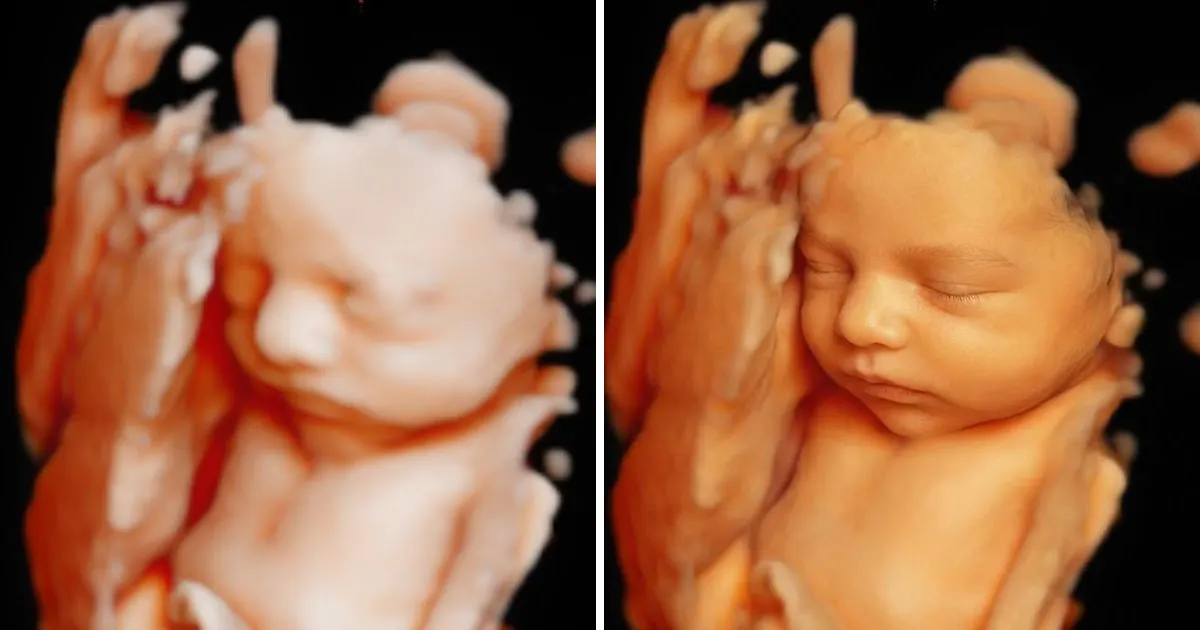
“I had my 5D ultrasound at week 28 and the image was already amazing. I uploaded it to BabyFaceReveal and it came out even sharper. It’s now framed in the baby’s room.”
— Lucía M., 31 weeks